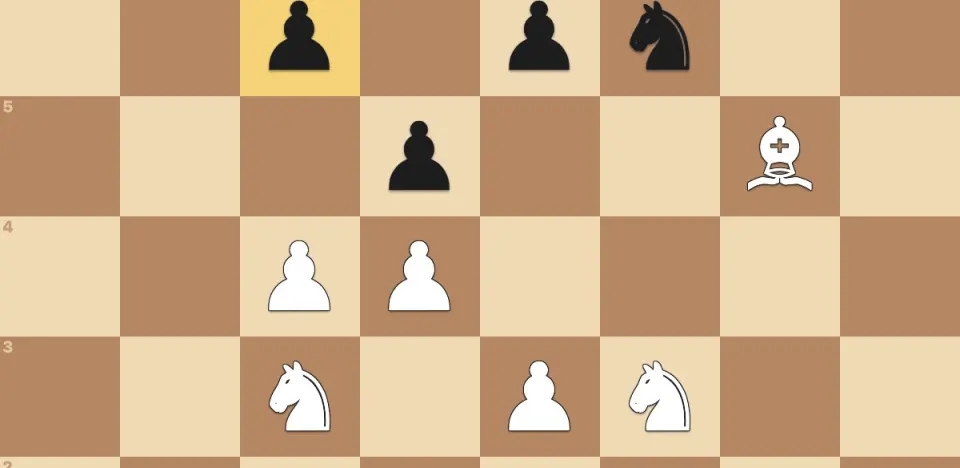
5 opening principles
- Take the centre: 1.e4 or 1.d4, then the second central pawn.
- Develop minor pieces: knights first, then bishops. A new piece every move.
- Castle early: the king is safe in the corner and the rook joins the game.
- Don’t bring the queen out early; the opponent gains tempi chasing it.
- Don’t move the same piece twice until the others are out.
Simple tactics
- Fork — one piece attacks two at once; the knight fork on king and queen is the classic.
- Pin — a piece cannot move because the king or a more valuable piece stands behind it (bishop pinning a knight).
- Discovered check — the front piece moves away and the rear piece gives check; the moving piece can capture anything meanwhile.
- Back-rank mate — after castling, your own pawns box the king in; a rook or queen on the back rank mates. Give the king an escape square (h3/h6).
Common mistakes
- Leaving a piece undefended: before each move check “what can the opponent take?”
- Thinking only about attack: watch the opponent’s plan too.
- Leaving the king exposed: don’t delay castling.
- Hoarding time: in a 10-minute game, about 15 seconds per move on average.
A 3-week practice plan
- Week 1: computer, Easy, as White; take back every mistake with ↩ Undo. Goal: stop giving pieces away.
- Week 2: Medium, as Black as well. Play one opening (the Italian) ten times.
- Week 3: online 10-minute games with a real opponent and rating. Even if you lose, a rating around 1200 finds equal opponents.
FAQ
How long does it take to learn chess?
The rules take a day. Beating the Medium level usually takes 2–3 weeks of daily practice. After that, online games teach you.
Is it better to start as White?
White moves first and sets the plan, slightly easier for beginners. But practise both colours: online, colours are random.
What is the best first move?
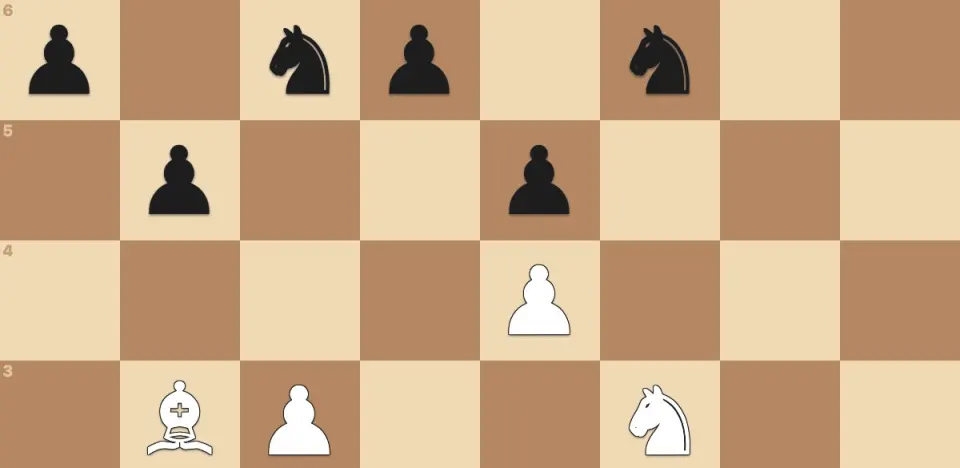
1.e4 or 1.d4: both take the centre and free the bishops. Beginners are advised 1.e4 and the Italian Game.
 Chess online — all topics10 pages