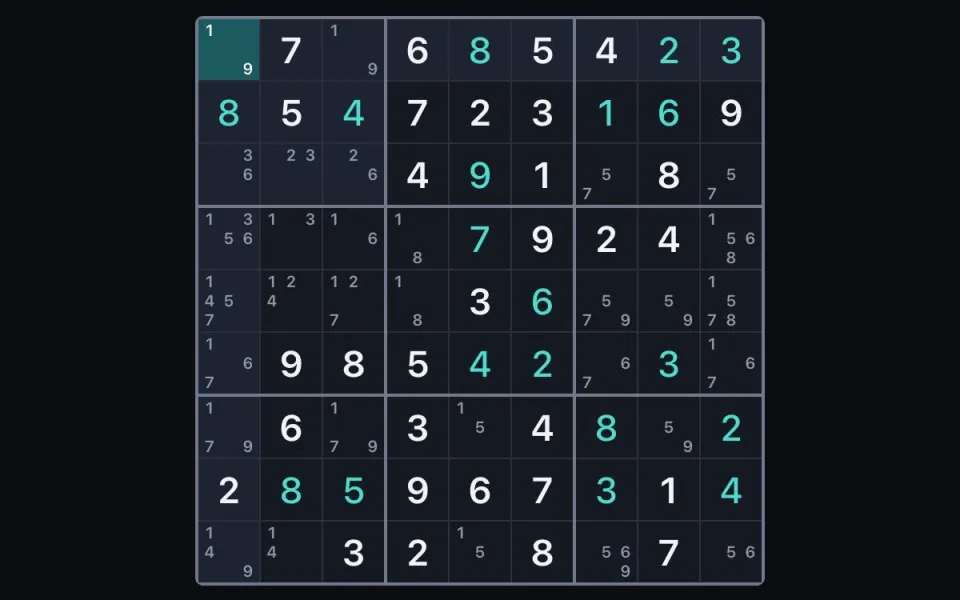
How the three levels differ
| Level | Hardest step | What to expect |
|---|---|---|
| Hard | naked and hidden triples, quads, or four or more pairs and locks | impossible without notes; 15 to 40 minutes |
| Expert | X-Wing, Swordfish, XY-Wing, XYZ-Wing | when singles run out you hunt for patterns; 20 to 60 minutes |
| Master | coloring, X- and XY-chains, or three or more fish and wings | several long deductions; up to an hour |
How to approach a hard puzzle
- First take all the singles: check each digit from 1 to 9 box by box.
- When singles run out, add the notes with “Fill”. From here every deduction trims the notes.
- Look for locked candidates: where a digit in a box sits in just one row or column.
- Then pairs and triples: two cells with the same two candidates are the quickest to spot.
- Still stuck? Pick one digit and look at all of its notes: that is how X-Wings and chains are found.
A hint when you are stuck
The hint picks the easiest step available: if no X-Wing is needed, it will not mention one. First it names the technique and the area, so you can try to find it yourself. The next stage shows the cells, candidates and lines. Only then does it apply. That way every hard puzzle teaches you a new technique. All the techniques with examples.
FAQ
Can Master really be solved?
Yes, a program has checked that human techniques solve each puzzle to the end with no guessing. You do need to know chains and coloring, and the hints explain those too.
Don’t fewer digits mean harder?
Not always. A 24-clue puzzle can fall to singles alone while a 34-clue one needs a chain. That is why we measure the technique needed rather than the digit count.
What if I make a mistake on Hard?
With “Show mistakes” on, the digit turns red at once. With it off, the hint finds the mistake first, even one in your notes.
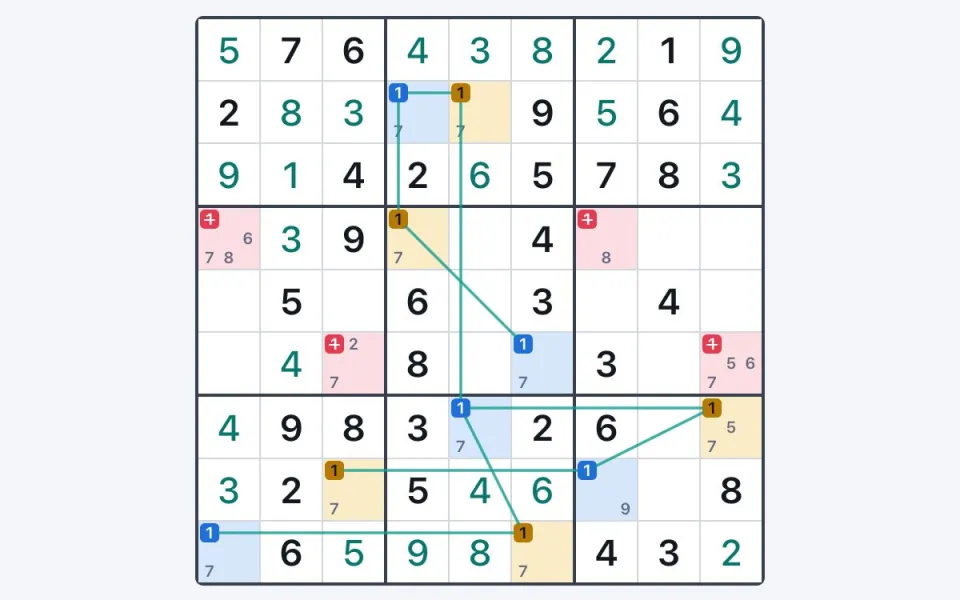 Sudoku techniquessingles to X-Wing, with examples
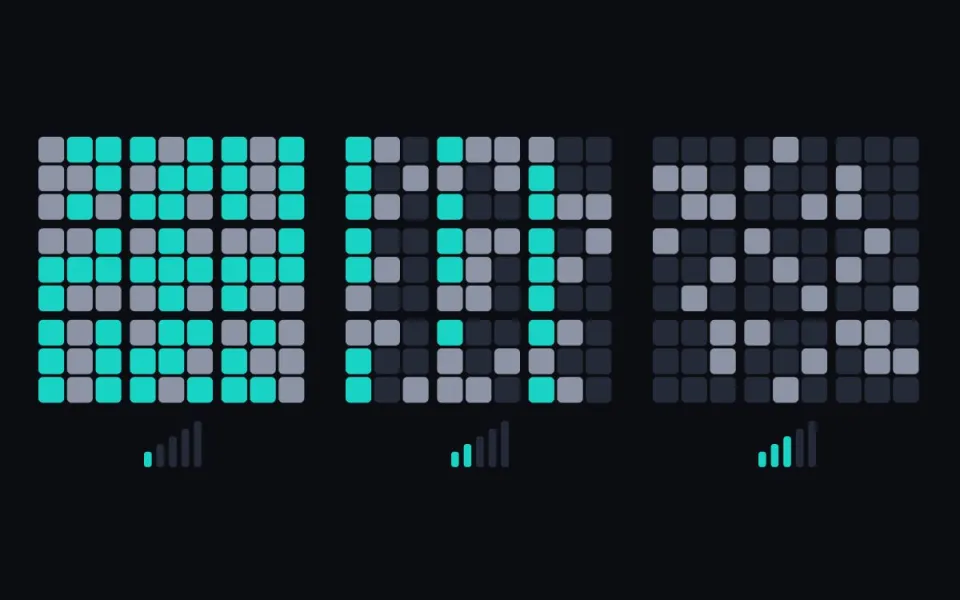 Daily sudokuthree a day, with a leaderboard
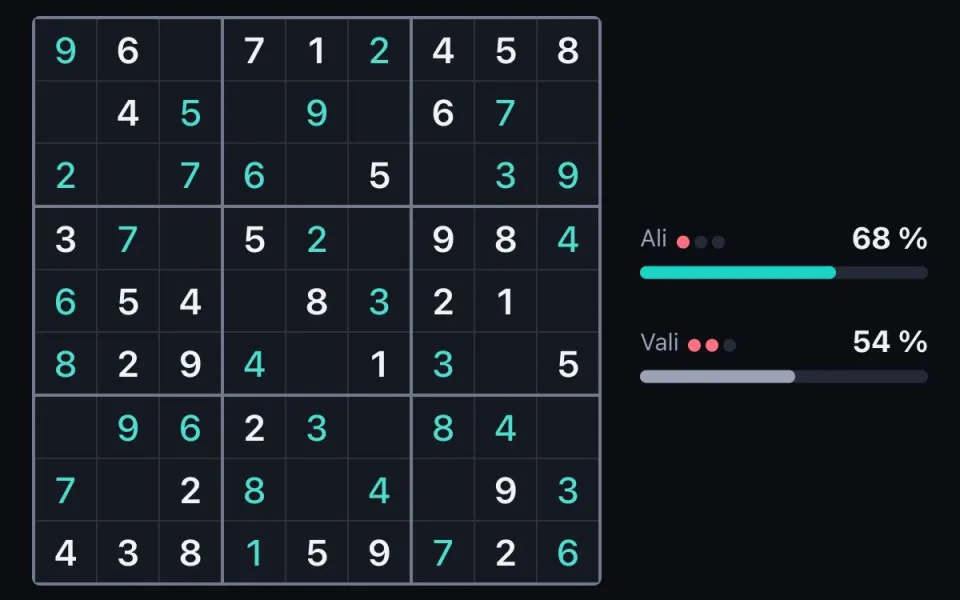 Sudoku duelrace a friend
 Sudoku rulesfor beginners