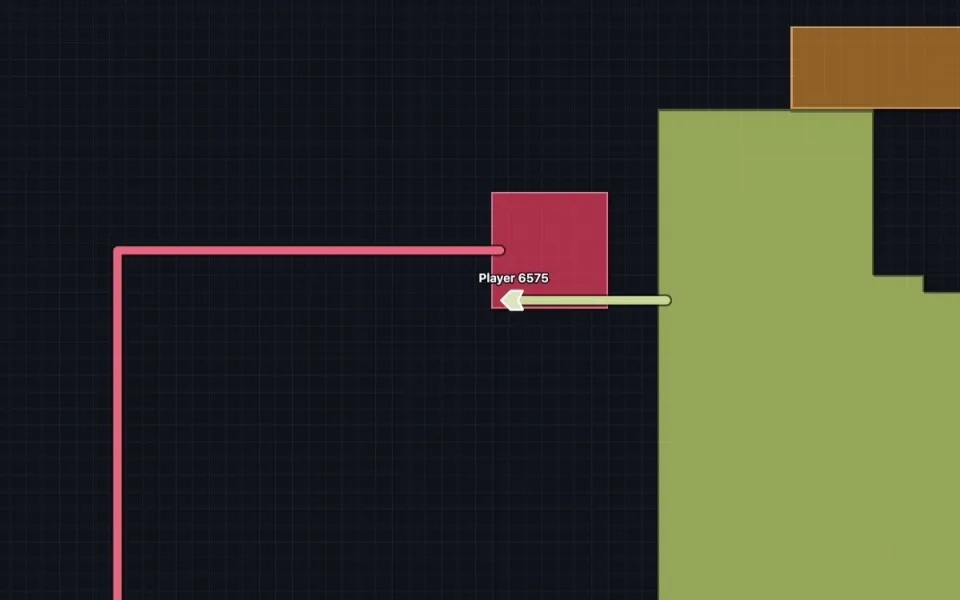
How big a loop is safe
| Trail length, cells | Got home | Average land gained | Share of map |
|---|---|---|---|
| 1–15 | 96.7% | 19 cells | 0.07% |
| 16–30 | 96.5% | 70 cells | 0.27% |
| 31–50 | 95.6% | 148 cells | 0.58% |
| 51–80 | 90.6% | 294 cells | 1.15% |
| 81–120 | 83.0% | 487 cells | 1.90% |
| over 120 | 75.1% | 424 cells | 1.66% |
Source: 12 rooms with 12 bots each (4 temperaments), 13.3 hours of play in total and 143,366 outings. People play differently from bots, so treat these numbers as a guide, not a law.
What the numbers say
- Land grows faster than the trail. Going from a 25-cell to a 65-cell trail gives over four times the land, while survival falls by only 6 points. That is why tiny loops are too slow.
- Beyond 120 cells there is no gain. Very long trails often draw awkward shapes: the gain stops growing while the risk keeps rising. One such outing in four ends in a knock-out.
- The more land you hold, the more careful you should be. A knock-out costs you everything. Factoring that risk in: at 2% of the map an 80–120 cell loop pays best, while at 10% loops of 30–80 cells come out ahead and both longer and very tiny ones lose on average.
- Other players are the main danger. 86% of knock-outs come from a cut trail, 13% from head-on collisions and only 1% from your own trail. A bot lasts 89 seconds on average and reaches 5.3% of the map.
Growing fast
- Start with a rectangle: 8–10 cells out, 12–15 sideways, then back. The first loop grows your land three or four times.
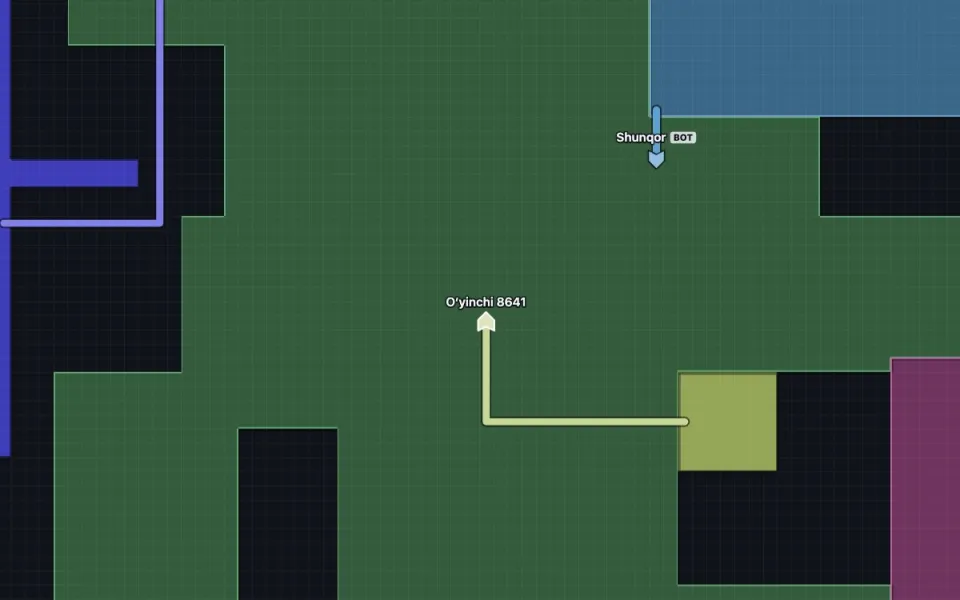
- Keep your trail parallel to your land: the way home stays short and one turn takes you back if danger appears.
- Take free land first, then bite into your neighbours. Other players’ land inside the loop becomes yours too.
- To claim a corner, run your trail along the wall: the wall itself is not a border.
How to knock out opponents
- Aim not for the head but for the point of the trail farthest from their land. They will not make it back in time.
- Before a head-on, compare territories: the percentages are on screen. If you are bigger, the collision favours you; if smaller, step aside.
- Waiting on your own land is safe: if an enemy trail runs across it, cut it at leisure, since you have no trail there.
- When hunter bots come near, keep your trail short; they only see what is close, so moving away ends the chase.
Common mistakes
- Drawing a spiral and trapping yourself in your own trail. Once the head is inside there is no way out.
- Riding off the screen blindly: not seeing an opponent does not mean there is none. Check the territories on the minimap.
- Heading straight into a big loop after a good capture. First see who is nearby.
FAQ
Do these numbers come from people’s games?
No, they come from a simulation with our bots. People play differently, but the overall pattern holds.
What is the best loop size?
While your land is small a trail of up to 80–120 cells pays off; around 10% of the map, 30–80 cells. With an opponent nearby, always shorter.
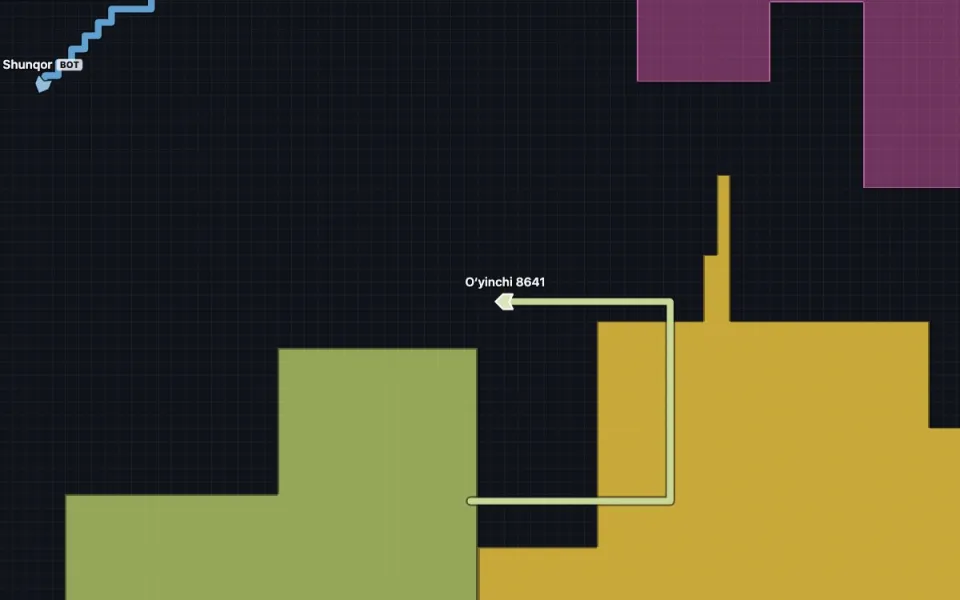 Rulestrail, loop, head-on, walls
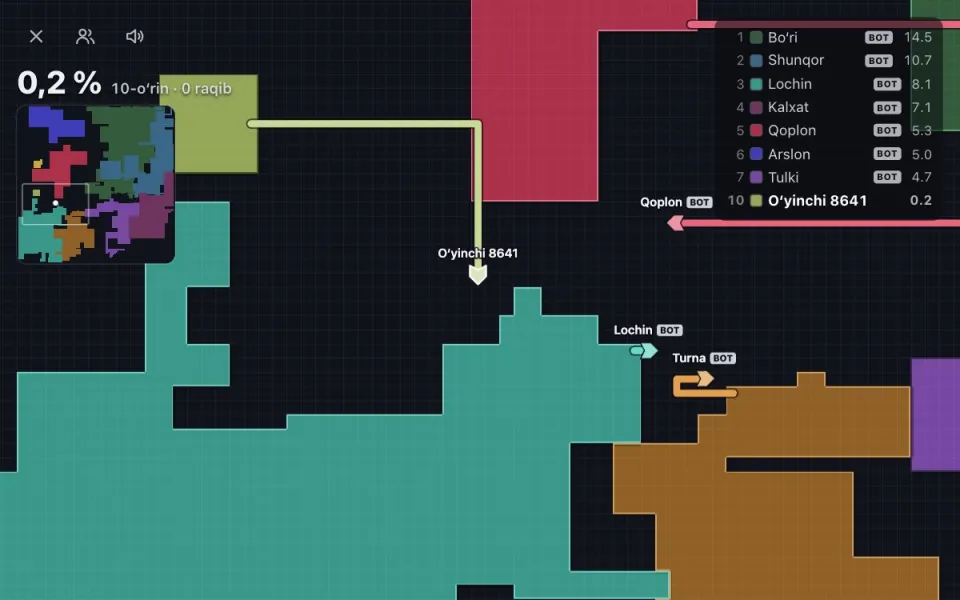 Hudud onlinethe game in brief
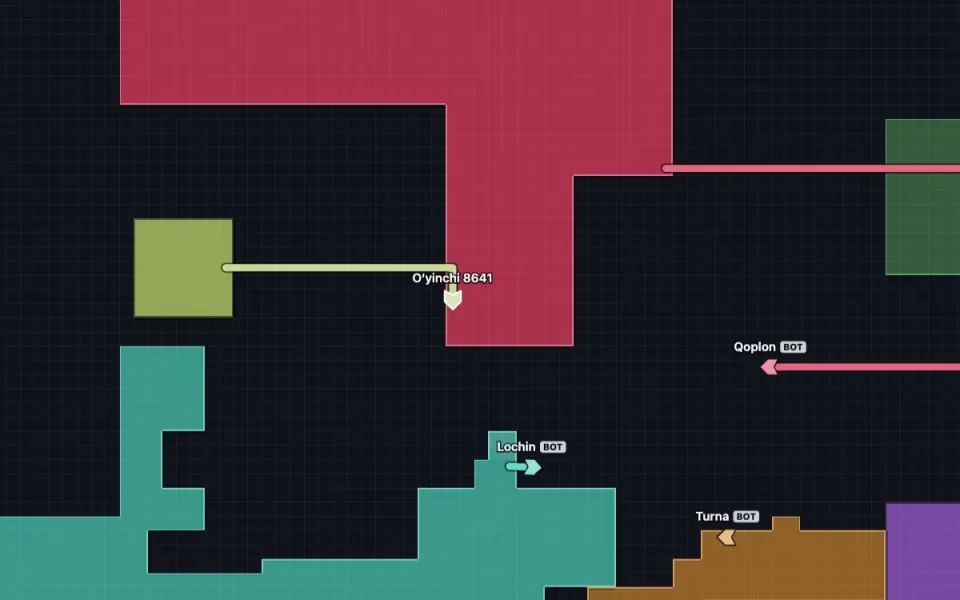 With friendsprivate room and link
 .io gameswhat the genre is about